Caitlin Clark and the Fever are walking into a matchup where one bad stretch could change the entire series.
But Las Vegas has A’ja Wilson, championship experience — and a warning Indiana cannot afford to ignore. 👀
The regular-season results say one thing… the playoffs may tell a completely different story.
One matchup, one weakness, one fourth-quarter run could decide everything.
And there’s one major question hanging over Indiana before tip-off…
👇 FULL GAME DETAILS, HOW TO WATCH & THE BIGGEST DANGER IN THE FIRST COMMENT.
 Game 2 brings the Indiana Fever into a matchup where weaknesses become increasingly difficult to conceal. Playoff basketball is built around repetition: identify something an opponent struggles to defend, attack it again, force an adjustment and then attack the adjustment.
That makes Indiana’s ability to adapt particularly important against the Las Vegas Aces.
Caitlin Clark will naturally command enormous attention, but Indiana’s biggest challenge may be ensuring that Las Vegas cannot turn its focus on Clark into a way of disrupting the entire Fever offense.
Clark’s shooting range changes the geometry of the court. Las Vegas cannot simply wait around the conventional three-point line. Her ability to threaten from deeper areas forces defenders higher, creating additional space behind them.
The question is what happens when the Aces decide one defender is not enough.
Las Vegas can aggressively trap Clark in the pick-and-roll, attempting to remove the ball from Indiana’s primary creator before she can attack.
That does not automatically mean the Aces have won the possession.
In fact, it can create exactly the advantage Indiana wants — provided the Fever react quickly.
Clark sees the second defender approaching.
She releases the basketball.
The screener catches in space.
Indiana can potentially attack four-on-three.
Now the possession becomes about decision-making.
Attack the rim if the lane is available.
Find the perimeter if a defender steps toward the ball.
Make another pass if Las Vegas rotates.
Cut behind the defense when weak-side defenders turn their attention toward the basketball.
There is no room for hesitation.
A four-on-three advantage can disappear within seconds against a disciplined playoff defense.
That places enormous responsibility on Clark’s teammates.
Las Vegas can live with sending two defenders toward Clark if Indiana’s other players become passive. The Fever need to make every trap expensive.
Open shooters must be prepared to shoot.
Players facing hard closeouts need to attack.
Screeners should recognize when slipping early can beat the trap before it develops.
Weak-side players need to continue moving.
Every additional defender committed toward Clark leaves additional space somewhere else.
Indiana’s job is finding it.
Kelsey Mitchell can become especially valuable in those situations.
If Clark attracts multiple defenders, Mitchell can receive the basketball against a defense already moving in rotation. That is very different from asking her to create against a completely organized five-player defense.
A hard closeout can become a driving opportunity.
A conservative closeout can become a perimeter shot.
Indiana should constantly search for ways to connect Clark’s gravity with Mitchell’s scoring ability.
Aliyah Boston can become equally important.
Her screens can create the initial advantage, but her role cannot end there. If Las Vegas traps Clark, Boston may become the release option in the middle of the floor.
From that position, she becomes a decision-maker.
Attack the basket.
Find Mitchell on the perimeter.
Locate a cutter.
Move the basketball toward the weak side.
Those decisions could determine whether trapping Clark becomes a successful Las Vegas strategy or something the Aces eventually have to abandon.
Indiana can also make Clark more difficult to contain by using her away from the basketball.
Instead of asking her to initiate every possession, another guard can handle while Clark moves through screens.
Her defender still cannot relax.
Lose Clark for one second and she can relocate into shooting space.
Stay attached to her and another Fever player gains additional room.
That is how Indiana can transform Clark from simply a ball-dominant creator into a constant source of defensive stress.
But the Fever’s offensive questions represent only half of Game 2.
At the other end waits A’ja Wilson.
Indiana cannot defend a dominant interior threat by panicking every time she touches the basketball. Sending uncontrolled help can create open shooters and force the Fever into long rotations.
The defense has to be coordinated.
The primary defender needs to compete physically without committing unnecessary fouls.
Help defenders need to arrive from intelligent positions.
Weak-side defenders must understand when to rotate and when to remain connected to shooters.
Indiana’s objective should not be expecting one defender to solve everything. It should be forcing Las Vegas to work for quality opportunities without allowing one matchup to collapse the entire defensive structure.
Then the Fever must rebound.
That may sound simple, but it could become one of the most important elements of the game.
A strong defensive possession is wasted if Las Vegas retrieves the miss.
Second-chance opportunities do more than provide another shot. They force Indiana to defend longer and prevent the Fever from entering transition.
That transition game could be one of Indiana’s best weapons.
Once a rebound is secured, Clark can immediately begin searching up the floor.
One teammate sprints toward the rim.
Mitchell can fill a wing.
Another shooter can trail.
Clark has multiple options before Las Vegas establishes its preferred defensive matchups.
Indiana should attack those opportunities.
But pace cannot become recklessness.
If Las Vegas successfully retreats, the Fever need to recognize that the transition window has closed and organize their half-court offense.
Forcing the ball through traffic is exactly how one bad possession can become two points at the other end.
That makes turnovers another major danger.
Clark’s ambitious passing is part of Indiana’s offensive identity. Her willingness to attempt difficult deliveries creates opportunities that a more conservative offense would never discover.
The Fever should not remove that creativity.
They simply need to control unnecessary risk.

Live-ball turnovers are particularly damaging because they allow Las Vegas to attack before Indiana can organize defensively.
And this is where the warning contained in the headline becomes especially relevant: one bad stretch can change everything.
Imagine Indiana commits two turnovers.
Las Vegas converts the first into a layup.
The Fever rush a three-pointer on the next possession.
The Aces score again.
Indiana commits another turnover.
Suddenly a competitive game has become an 8–0 or 10–0 run.
That is playoff basketball.
The Fever cannot guarantee that Las Vegas will never create momentum. Their challenge is preventing a run from becoming an avalanche.
When the Aces begin accelerating, Indiana needs a quality possession.
Run the offense.
Make Las Vegas defend.
Attack the matchup that created good opportunities earlier.
Then get back and defend without frustration.
Indiana cannot answer chaos with more chaos.
The same principle applies to shot selection.
Clark can change the atmosphere with a deep three-pointer, but spectacular attempts cannot become Indiana’s only response when pressure rises.
Use Clark’s range to manipulate the defense.
Force Las Vegas higher.
Attack the opening.
Draw help.
Move the basketball.
Create the better shot.
That is far more sustainable than hoping difficult three-pointers repeatedly rescue possessions.
Game 2 will also test the coaching adjustment battle.
Las Vegas can change coverages throughout the night.
Trap Clark early.
Switch later.
Show pressure and retreat.
Deny her the basketball in the fourth quarter.
Indiana needs counters ready.
Against trapping, use the short roll.
Against switching, identify favorable matchups.
Against denial, allow Mitchell or another guard to initiate while Clark moves off the ball.
Indiana can also use higher screens, empty-corner actions and quick re-screens to change the geometry of the possession.
Small tactical adjustments can create enormous playoff consequences.
And then comes the fourth quarter.
This may be where the biggest question surrounding Indiana receives its answer: when Las Vegas forces the basketball away from Clark, can everybody else finish the possession?
Imagine Clark receives the ball with Indiana needing a basket.
Two defenders attack her.
She passes immediately.
Boston catches in space.
The defense rotates.
Boston finds Mitchell.
Mitchell receives an open opportunity.
Shoot.
The decisive basket does not necessarily need to belong to Clark. It could exist specifically because Las Vegas is determined to prevent her from taking it.
If Indiana can consistently convert those possessions, defending the Fever becomes extraordinarily complicated.
If the Fever hesitate whenever Clark loses the ball, Las Vegas has found the weakness it wants to attack.
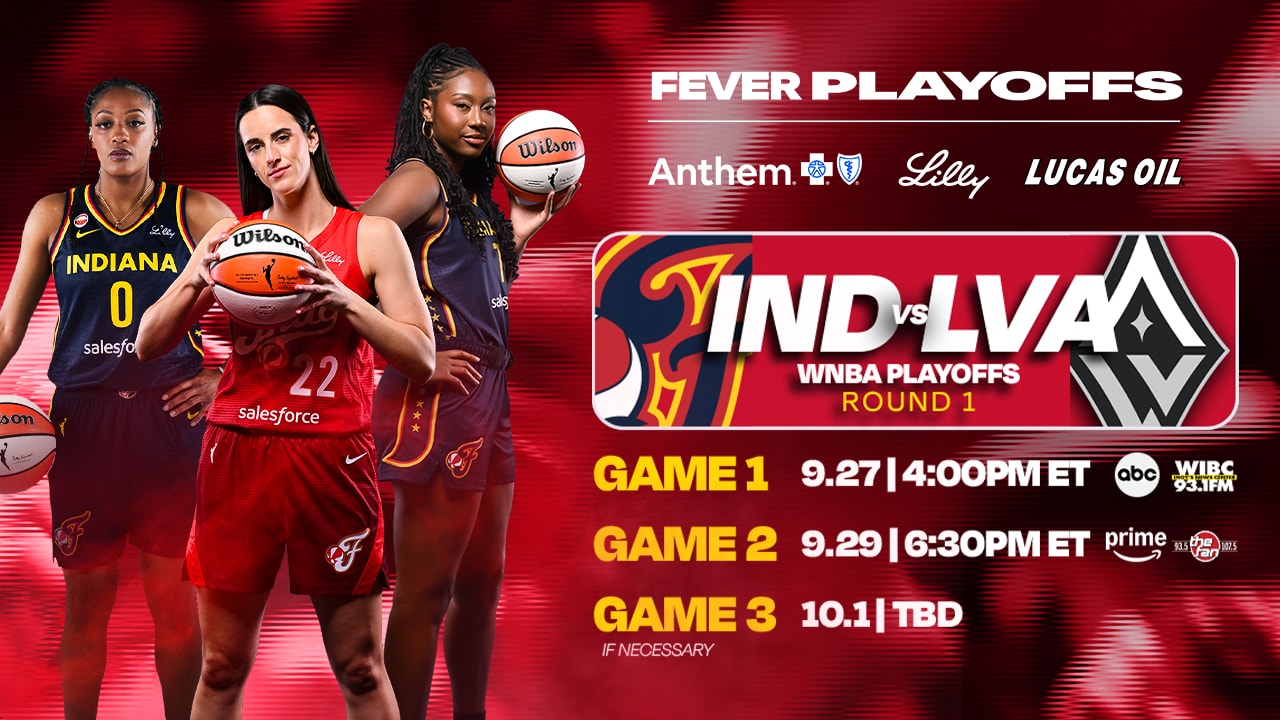
The supplied promotional text presents this as Game 2 of a first-round Indiana Fever–Las Vegas Aces playoff matchup and references regular-season results, Wilson’s championship experience and a major pregame question. However, it does not provide the actual regular-season results, Game 1 score, exact tip-off time, television network or authorized streaming platform. Those missing details should not be invented.
The basketball questions are much clearer.
Can Indiana control turnovers?
Can the Fever finish defensive possessions with rebounds?
Can Boston punish traps as a short-roll decision-maker?
Can Mitchell capitalize when Las Vegas shifts additional attention toward Clark?
And can Indiana remain composed when the Aces inevitably produce a run?
The answer may determine Game 2.
Because in playoff basketball, an entire night can change in minutes.
One turnover. One rebound. One defensive mistake. One extra pass. One fourth-quarter run.
Against Las Vegas, there really may be nowhere to hide.